How To Read A Peptide Purity Test: Hplc, Mass Spectrometry And Coa Interpretation For Uk Scientists 2026
Validated > 99% Lab-grade Peptides
The gold criterion for measuring peptide pureness is high-performance liquid chromatography, widely abbreviated as HPLC. If you see a pureness percentage on a peptide item, it almost certainly originated from an HPLC evaluation. This issues since peptides are built one amino acid each time with solid-phase peptide synthesis (SPPS). At each step, there's a little possibility that something fails-- an amino acid doesn't attach, the incorrect modification takes place, or a side reaction generates an unexpected by-product. Over a chain of 10, 20, or 40 amino acids, those small per-step error rates compound.
In vivo tests evaluate absorption, distribution, metabolic rate, and discharging (ADME) qualities, better validating efficiency and security. These screening solutions not just aid clients maximize items specifically during advancement however likewise give solid data support for regulative compliance of peptide formulations. Beware of COAs that supply a pureness number without any supporting chromatographic information, report purity without defining the logical method, or listing a molecular weight without mass spectrometry verification. Tandem mass spectrometry (MS/MS or MS ²) fragments the peptide ions in the gas phase and analyses the piece masses. This is the gold requirement for peptide identity-- it validates both the make-up and the series. For numerous peptide projects, absolute peptide amount matters as high as chromatographic purity.
Reputable peptide providers always mark their items by doing this and provide quality reports with HPLC and MS information to back up the pureness level. As long as you get peptides from a relied on source that provides a total certificate of evaluation, you can be certain in the peptide's purity quality and usage scope. Peptides are checked through a mix of strategies, including HPLC for purity, mass spectrometry (MS) for sequence verification, and nuclear magnetic vibration (NMR) for architectural evaluation. These techniques help identify the peptide's composition, verify the molecular weight, and detect any kind of architectural changes or pollutants, ensuring the peptide meets quality and specification needs. With our comprehensive peptide analysis system, Creative https://trentonphnv854.stonefielddigest.com/posts/what-is-peptide-pureness-and-why-does-it-matter-in-research-grade-peptides-qing-li-peptide Proteomics has created an extremely sensitive and specific system.Example Preparation
At Maxed Out Substances, every item we provide comes with a clear testing document and transparent paperwork. Our objective is to sustain researchers with high-purity, validated compounds that fulfill the demands of modern-day clinical research study-- absolutely nothing more, nothing less. Independent, third-party screening plays a crucial function in guaranteeing objectivity and accuracy. By using exterior labs for confirmation, distributors get rid of prejudice and maintain scientific credibility. It's an extra step that provides scientists self-confidence that each peptide fulfills regular, verifiable standards. This quality matches the majority of artificial insemination study applications-- receptor binding assays, enzyme activity studies, and cell culture experiments.Compounds

A practical assay determining downstream signaling-- or a structural research utilizing NMR or X-ray crystallography-- demands the highest pureness readily available. Crystallographers particularly commonly require ≥ 98% purity since even small pollutants can stop crystal formation or present problem right into the crystal lattice. As particles exit the column, they go through a detector-- generally a UV detector readied to 214 or 220 nm, wavelengths where the peptide bond absorbs light highly. The detector records just how much UV light is soaked up over time, producing a graph called a chromatogram. This overview breaks down what purity really suggests in peptide chemistry, exactly how it's measured, what the pollutants are, and just how to read the paperwork that verifies a peptide is what it claims to be.
- At Creative Peptides, we supply personalized peptide chemical and physical evaluations for study teams that need reliable data on peptide identification, pureness, structure, solution behavior, and example quality.
- A 95% pureness means that out of every 100 "books" in your batch, 95 are best copies and 5 have some kind of error.
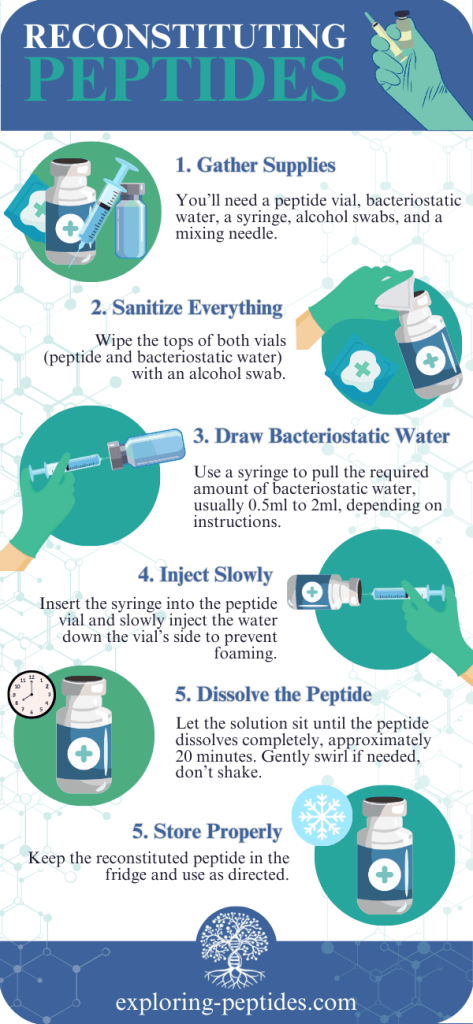
- This attaches directly with handling subjects such as peptide storage space and peptide reconstitution.
- Mass spectrometry gives molecular verification by detecting the specific mass of the peptide and any co-eluting varieties or truncated series with high accuracy.